
First, relief
Pain
Calm the pain down.
Hands-on work and gentle, well-chosen loading settle the irritated joint or tendon and the muscles guarding around it. That starts your first visit.
What We Treat
The stairs you now take one at a time, good leg first. The minute you sit on the edge of the bed before the first step. It’s fixable, and it starts with a cause-first evaluation, not a guess.
Sound Familiar?
Two or more? Keep reading.
Why It Happens
Your hip and knee don’t hurt for no reason. And it’s almost never one thing. It’s usually a mix of four: a joint surface or a tendon carrying more load than it is currently set up to carry. A joint that stiffened after an injury, a long layoff or a surgery, and stopped sharing the work. Glute and quad weakness that lets the knee drift inward on every step down. And mechanics, how you walk, squat and take stairs, reloading the same spot before it ever settles.
None of that shows up in a quick glance. It takes a real, cause-first evaluation to sort out which one is driving your pain right now. That’s why a brace, a sleeve and a few weeks off keep falling short: they answer the symptom, not the source. You have spent years getting everyone else where they needed to go. This is the part of the list that keeps getting moved to next month. Find the actual cause and the fix stops being a guess.
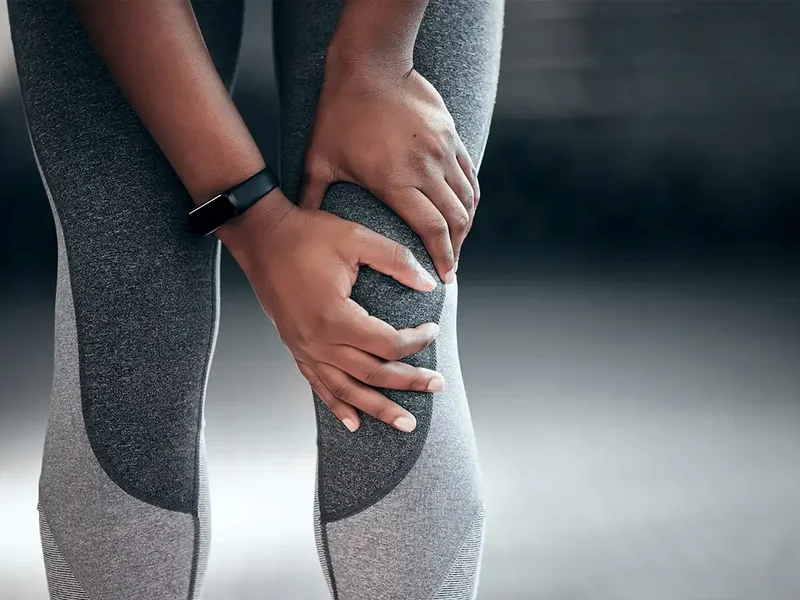
The Honest Truth
Nobody regrets starting too early.
How We Fix It
Every plan has an endpoint. Here’s what the four phases look like for a hip and a knee.
First, relief
Pain
Hands-on work and gentle, well-chosen loading settle the irritated joint or tendon and the muscles guarding around it. That starts your first visit.
Then, motion
Prime
Targeted mobility gives back the bend and the full straightening you have been getting by without, which is what makes a normal stride possible again.
Then, capacity
Perform
Progressive glute, quad and calf strengthening rebuilds the support the joint has been short on, one controlled step down at a time.
Last, staying power
Prevent
Stairs, hills, squatting and getting up off the floor get tested under real load before you’re cleared to go all in. That’s the endpoint, not another appointment.
I have been going to action rehab after a total knee replacement and have only good things to say about their awesome and knowledgeable therapists and staff. They are hugely responsible for the success of my recovery.
Shared by Jeff and Chrissie P. · Total knee replacement
Before: a total knee replacement
After: the success of my recovery
Questions, Answered
Usually not to get started. Imaging can show wear in hips and knees that walk and climb without complaint, so a picture on its own doesn’t explain why yours hurts on stairs and not on flat ground. In Hawaii you can start physical therapy without a referral, so we begin with a hands-on, cause-first evaluation: what the joint will and won’t do, what the muscles around it can hold, and how you move through a step. If a scan turns out to be genuinely necessary, we help you get it and coordinate with your doctor.
A replaced joint still has to be taught to bend, straighten, carry you and climb, and that work is rehab, not time. We treat both before and after joint replacement, and we follow your surgeon’s protocol rather than working around it, coordinating with your primary care doctor, your orthopedic doctor and your insurance company. Jeff and Chrissie P. came to us after a total knee replacement and left the review further up this page. If you are years past your surgery and still favoring that leg, that is worth an evaluation too.
You get a plan with an endpoint, and you hear it at the end of the first visit. Your evaluation is what sets the number, because a knee that swelled up after a hike and a hip that has ached for three years are not the same job. From there you move through four phases, Pain, Prime, Perform and Prevent, and you always know which one you are in and what is left. No open tab of appointments, and no vague “come back next week.”
Book Your Visit
Request a time and a real person calls you back. No phone tree. No ‘someone will reach out.’ Just a plan.
5.0 · 20+ Google reviews
A real person calls you back
Step 1 of 5
That’s the hard part done. We’ll call during business hours to lock in your time.
Kakaʻako · Plenty of parking