
1
We pick the area and talk through the marks.
Suction that lifts tight tissue instead of pressing into it. Yes, it leaves round marks, and we tell you that before we start, not after.
What It Is
Almost every hands-on technique pushes into tissue. Sometimes an area has been pushed on plenty and it braces the second anyone leans on it. Cupping goes the other direction.
A cup is placed on the skin and the air is drawn out of it, so the cup pulls upward instead of down. The skin and the layer beneath it lift into the cup. Some cups sit still for a few minutes. Some get slid along the muscle while the suction holds, so the pull travels with them.
Then the honest part: it leaves round marks. They show up where the cups sat, they fade over the following days, and they can look worse than they feel. That is exactly why we describe cupping before we use it, so you are not meeting those circles in the mirror later. Everything here stays your call.
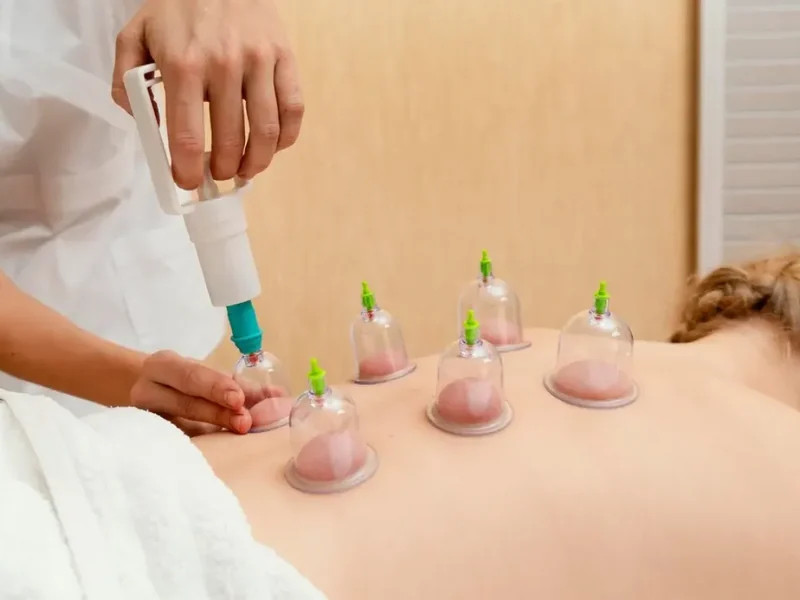 Always optional, never sprung on you
What It Helps
It comes up most when an area stays tight and guarded, and pressing on it only makes it brace harder.
What A Session Looks Like
1
We pick the area and talk through the marks.
2
Cups go on, the tissue lifts.
3
Then you move, while it is loose.
Why It Works
A different input for tissue that braces.
Lifts the area instead of pressing it.
No downtime, and the marks fade.
Fits the plan you’re already on.
Pairs Well With
Questions, Answered
It is a strong pull rather than a press, and most people call it strange before they call it painful. Say the word and the suction comes down or the cup comes off. And yes, it leaves marks: round, where the cups sat, fading over the following days. They usually look more dramatic than they feel. We tell you about them before we start so you are not surprised by them in the mirror.
No. Massage and hands-on manual therapy press into tissue. Cupping pulls it upward, which is a different input entirely. Both belong in a plan, and we have a licensed massage therapist on the team, so this is not one against the other. Cupping is simply one option your physical therapist may reach for on a guarded area during a visit.
Cupping is not a standing appointment you buy by the block. It gets used when it is the right input, inside a plan built from your evaluation, one-on-one with a licensed physical therapist, every visit. That plan has an endpoint, and you hear it out loud on the first visit rather than guessing at it for months. Want to ask before you book? Call us at (808) 597-1555.
Book Your Visit
Request a time and a real person calls you back. No phone tree. No ‘someone will reach out.’ Just a plan.
5.0 · 20+ Google reviews
A real person calls you back
Step 1 of 5
That’s the hard part done. We’ll call during business hours to lock in your time.
Kakaʻako · Plenty of parking