
First, relief
Pain
Take the edge off that first step.
Hands-on work settles the irritated heel, arch or Achilles tissue, and we change what you’re asking the foot to do all day, starting your very first visit.
What We Treat
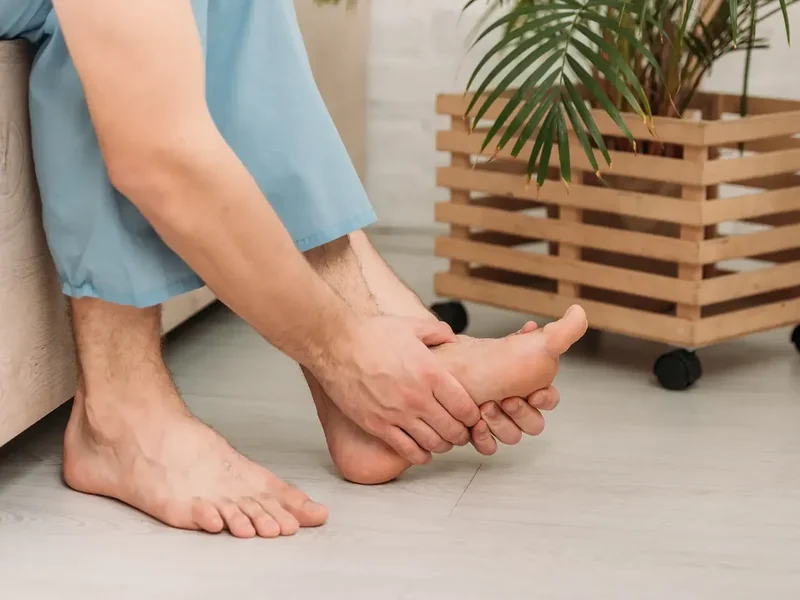
The first step out of bed you brace for. The ankle that still doesn’t trust a curb. It’s fixable, and it starts with a cause-first evaluation, not another insole.
Sound Familiar?
Two or more? Keep reading.
Why It Happens
Your foot doesn’t hurt for no reason. And it’s rarely just one thing. It’s usually some mix of four culprits: tissue at the heel, the arch or the Achilles taking on more load than it gets time to recover from. A stiff ankle and calf that stop giving your stride the motion it needs. An old sprain that healed but never got its strength and balance back. And the daily inputs, your shoes, your surfaces, your standing hours, that reload the same spot before it settles.
None of that shows up in a quick glance at your arch. It takes a real, cause-first evaluation to sort out which one is actually driving your pain, and whether your hip and knee are handing the foot a job it was never built to do. That’s why rest, ice, or a new insole so often falls short: they answer the symptom, not the source. Find the real cause, and the fix gets obvious.
The Honest Truth
Nobody regrets starting too early.
How We Fix It
Every plan has an endpoint, and you work it one-on-one with a licensed physical therapist, every visit. Here’s what the four phases look like for a foot and ankle.
First, relief
Pain
Hands-on work settles the irritated heel, arch or Achilles tissue, and we change what you’re asking the foot to do all day, starting your very first visit.
Then, motion
Prime
Calf and ankle mobility come back first, because a stiff ankle makes every single step land somewhere it shouldn’t.
Then, capacity
Perform
Calf, foot and hip strengthening plus balance work rebuild what an old sprain or a long flare-up quietly took from you.
Last, staying power
Prevent
Distance, hills, stairs and uneven ground get tested for real before you’re cleared to go all-in: that’s the endpoint, not just another appointment.
I have been going to action rehab after a total knee replacement and have only good things to say about their awesome and knowledgeable therapists and staff. They are hugely responsible for the success of my recovery.
Shared by Jeff and Chrissie P. · Google review
Phase 1, Pain: calm the symptom down and get you moving again
Phase 4, Prevent: keep it from coming back
Questions, Answered
No. An insert can change where load lands on your foot, but it never tells you why that load became a problem in the first place. We start with a cause-first evaluation and look at the whole chain: your heel and arch, your ankle and calf motion, your hip, and the way you actually walk. If something about your footwear needs to change, we’ll say so plainly. It just won’t be the entire plan, because it isn’t the entire cause.
Complete rest usually backfires. Heel, arch and Achilles tissue get stronger under the right amount of load and weaker without it, so time off often buys you a few good mornings and then hands back the same painful first step. The real skill is dosing exactly what your foot can handle right now, then adding to it on purpose. That’s what you get one-on-one with a licensed physical therapist, every visit.
Nobody can answer that honestly before they’ve looked at your foot. What you can count on is a plan with an endpoint. You leave the first visit knowing what’s driving the pain and roughly how long it takes, then you move through four phases, Pain, Prime, Perform and Prevent. You’ll always know which phase you’re in and what’s left, instead of an open-ended string of appointments.
Book Your Visit
Request a time and a real person calls you back. No phone tree. No ‘someone will reach out.’ Just a plan.
5.0 · 20+ Google reviews
A real person calls you back
Step 1 of 5
That’s the hard part done. We’ll call during business hours to lock in your time.
Kakaʻako · Plenty of parking