
1
We warm the area up first.
Instrument-assisted soft tissue work: a contoured steel tool your therapist runs over a stiff, ropey area to find what a thumb slides right past.
What It Is
Your therapist’s hands are the first instrument, and they catch most of what needs catching. In a dense, ropey area, though, a thumb can glide right over the part that stopped moving.
The Graston Technique is instrument-assisted soft tissue mobilization. Your therapist runs a contoured stainless steel instrument over the skin, usually with a little lotion, along the line of the tissue. Where that tissue is restricted, the instrument feeds it back as a gritty, catching feel. You notice it. So do they. That is how the area gets found, and then worked.
It is not a gadget you take home and it is not a longer massage. It is used on one area your evaluation pointed at, for part of a visit, and it is followed by movement in the same session. Some people get mild redness or tenderness there for a day or so.
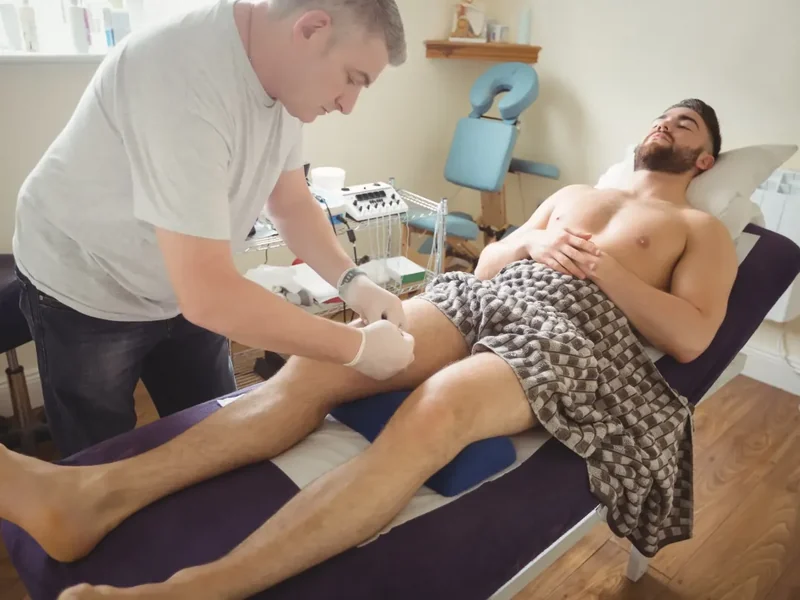 Always optional, never sprung on you
What It Helps
It comes up most for the dense, ropey spots that have been stiff long enough that you stopped noticing them.
What A Session Looks Like
1
We warm the area up first.
2
The instrument finds the restricted tissue.
3
Then we load it with movement.
Why It Works
Finds restriction a thumb glides past.
Feedback your therapist can feel.
One area, worked on purpose.
Fits the plan you’re already on.
Pairs Well With
Questions, Answered
You feel the instrument catch as it crosses a restricted spot, and on a tender area that catch can be uncomfortable. Your therapist sets the pressure and changes it as you talk, so it never has to be more than you want. Afterward some people get mild redness or tenderness there for a day or so. It should never leave you unable to use the arm or leg we worked on.
No. Massage covers a broad area by hand and has its own job. The Graston Technique is narrow on purpose: a contoured steel instrument run along one restricted area your evaluation identified, for part of a visit, then loaded with movement while it is still fresh. It is a tool inside a physical therapy plan, not a treatment you book on its own.
Nobody can answer that honestly before they have examined you, so we do not pretend to. Your evaluation sets the length of the plan, and the plan has an endpoint. The instrument work shows up on the visits where it is the right call, one-on-one with a licensed physical therapist, every visit, and it steps back once the area is moving and holding. Want to ask before you book? Call us at (808) 597-1555.
Book Your Visit
Request a time and a real person calls you back. No phone tree. No ‘someone will reach out.’ Just a plan.
5.0 · 20+ Google reviews
A real person calls you back
Step 1 of 5
That’s the hard part done. We’ll call during business hours to lock in your time.
Kakaʻako · Plenty of parking